
What to Expect at Your Child’s First ABA Therapy Session?
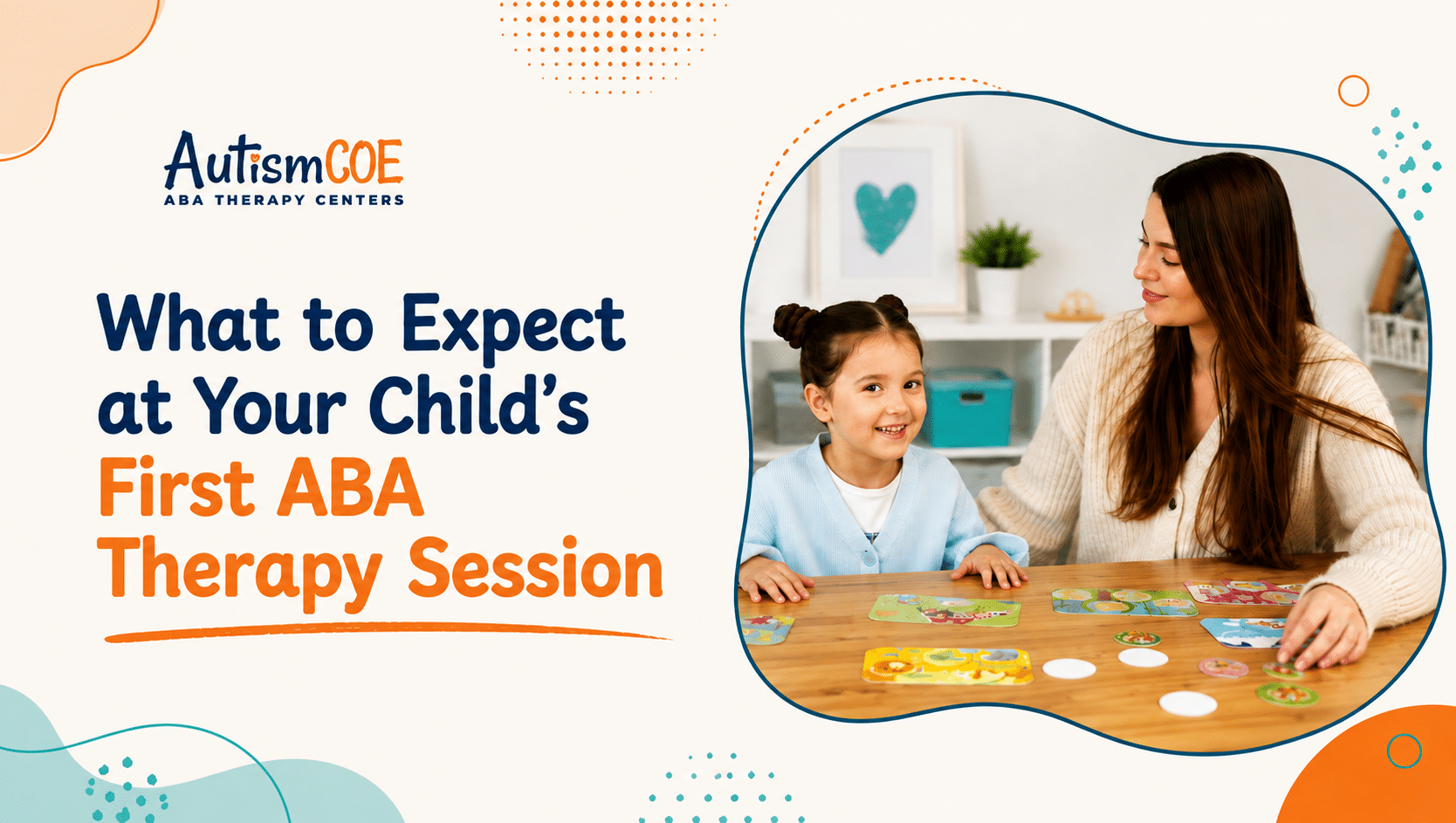
Your child’s first ABA therapy session is a low-pressure introduction focused on rapport building, observation, and getting to know your child, not heavy teaching or formal testing. The goal of day one isn’t to jump straight into skill building; it’s to make sure your child feels safe enough that skill building can happen later.
If you’re a parent staring down a calendar date for your child’s first session, that’s probably not the reassurance you were expecting. Most of us picture therapy starting the way school does, with a lesson plan, a desk, a clear beginning and end. ABA therapy doesn’t work that way, especially not on day one, and knowing that ahead of time can save you and your child a lot of unnecessary nerves. If you want a broader look at how our ABA therapy program is structured overall, that’s a good place to start before diving into what session one specifically looks like.
Before the First Session: The Initial Assessment
Here’s something that trips up a lot of families: the “first session” and the “initial assessment” often get talked about as the same thing, and they’re not.
The assessment usually happens first, sometimes over one visit, sometimes spread across two. A Board Certified Behavior Analyst (BCBA) observes your child in different settings, notes their strengths alongside the areas where they could use more support, and evaluates communication, social interaction, and daily living skills. You’ll be part of this too, expect questions about routines, what frustrates your child, and what you hope therapy will change. Once the assessment wraps up, the BCBA uses everything gathered to build the individualized treatment plan that session one and every session after it will be built around.
| BCBA (Board Certified Behavior Analyst) | RBT (Registered Behavior Technician) | |
| Role | Designs the treatment plan, sets goals, supervises care | Delivers the day to day therapy sessions directly |
| Time with your child | Periodic: assessments, plan updates, supervision visits | Frequent: most one on one session time |
| Training level | Graduate degree, board certification, ongoing supervision requirements | Trained and certified specifically to implement the BCBA’s plan |
| Who you’ll talk to about progress and goal changes | The BCBA | — |
| Who you’ll usually see most in the room | — | The RBT |
Think of the BCBA as the architect and the RBT as the builder working from those blueprints, both essential, both credentialed, just different jobs. For a fuller picture, our post on BCBA vs. BCaBA vs. RBT roles breaks down the full care team structure.

What Actually Happens in Session One?
Rapport Building and “Pairing”
The biggest thing happening in an early ABA session is pairing, the process of the therapist deliberately associating themselves with things your child already enjoys. If your child loves bubbles, blocks, or a specific toy, expect the therapist to lean into that in the first few visits. This isn’t filler before the “real” therapy starts. It is the real therapy at this stage.
A 2024 study in the journal Behavioral Interventions found that child engagement, things like collaborative play and positive exchanges with the adult, increased after early interventionists were trained specifically in pairing skills. Practically, this means your child’s therapist will follow their lead, get down on the floor, and make the room feel like an invitation rather than an evaluation.
Low-Demand, Play-Based Activities
Expect demands to be minimal in session one. Nobody asks your child to sit still or complete a worksheet on day one. Early sessions are built around short activities matched to your child’s actual interests. If your child wants to line up cars for twenty minutes, a skilled therapist finds a way into that world instead of pulling them out of it. Easing in this way protects the trust everything else depends on.
Data Collection From Day One
Even though session one looks relaxed, data collection starts immediately. The therapist quietly tracks how your child responds to different activities, what motivates them most, and how they handle transitions. This baseline is what future progress gets measured against, so “nothing is really happening” is rarely true, even when a session looks like simple play from the outside. You may also notice specific reinforcement, praise or access to a preferred toy, timed carefully around your child’s behavior. Our post on reinforcement vs. punishment in ABA therapy breaks down why reinforcement is the go to tool from session one onward.
Where Sessions Take Place: In-Home, Center-Based, or School
Where your child’s sessions happen depends on their needs, your family’s schedule, and what the treatment plan calls for. Some families start in a clinic setting, where a structured environment can help minimize distractions. Others begin in home, where a child learns skills in the exact environment; they’ll actually use them. Some children benefit from a school-based component once goals shift toward classroom readiness. Neither setting is universally better; it depends entirely on your child.

What Parents Can Do to Help
Your role here is bigger than most parents expect going in. You’re typically invited to observe sessions, and your input genuinely shapes how the plan develops.
A few things that make the first weeks go more smoothly:
- Bring items your child is already drawn to. A favorite small toy or comfort object can ease a new environment.
- Skip the pep talk about “good behavior.” Building expectations before a first session can backfire. Let the therapist do the inviting.
- Ask what you’re watching for. If you’re sitting in, ask the BCBA or RBT what they’re paying attention to.
- Expect to be trained too. Part of ABA’s effectiveness comes from consistency between sessions and home life.
- Take care of yourself in the process. Starting therapy is an adjustment for the whole family, not just your child. Our guide on self-care for parents of children with autism is worth a look if the transition feels heavier than expected.
How Goals Evolve After the First Few Sessions
The plan your child starts with is not the plan they’ll be on six months from now. As the team gathers more data and your child settles into the rhythm of therapy, goals get refined, sometimes because a skill develops faster than expected, sometimes because a bigger underlying need becomes clear. Nothing is locked in. Every session’s data feeds into decisions about what comes next, and your BCBA should be checking in with you regularly, not just handing you a static plan on day one.
Enjoying Reading?
Join Our Weekly Newsletters!
Subscribe now to stay updated with our latest email updates.
Frequently Asked Questions & Answer
Is the first ABA session the same as the evaluation?
No. The evaluation typically happens first and focuses on building your child’s treatment plan. The first actual therapy session comes after and focuses on rapport building rather than formal assessment.
What should I bring to my child's first ABA session?
A favorite toy, comfort item, or snack can help, along with any notes on routines or triggers you think the team should know. There’s no required homework to prepare beforehand.
Will my child be tested on their first day?
Not in a formal sense. Testing style tools are typically used during the earlier evaluation stage, not the first hands on session, which is intentionally low demand.
Can I stay in the room during the first session?
In most cases, yes. Parent observation is encouraged, especially early on, though it’s worth confirming the specific policy with your provider.
How long is a typical first ABA session?
This varies by provider and by the child, but most initial sessions run shorter than standard ongoing sessions, since the goal is comfort and connection rather than full programming.
Please Note: The content of this blog is for informational purposes only and should not be considered a substitute for professional medical advice, diagnosis, or treatment. Consult a qualified healthcare professional for personalized guidance tailored to your specific situation.

Esha Bhasin
Esha Bhasin is the award-winning CEO & Founder of Autism Center of Excellence (AutismCOE). She was honored with the 2026 Triangle Business Journal Corporate Leadership Award. Before founding AutismCOE, she spent over nine years as a Senior Consultant at KPMG US. She specialized in Medicaid and State Public Health. Inspired by her own family's autism journey, she founded AutismCOE to improve access to quality autism care. Esha writes about autism care, Medicaid policy, and healthcare operations.