Search a Topic
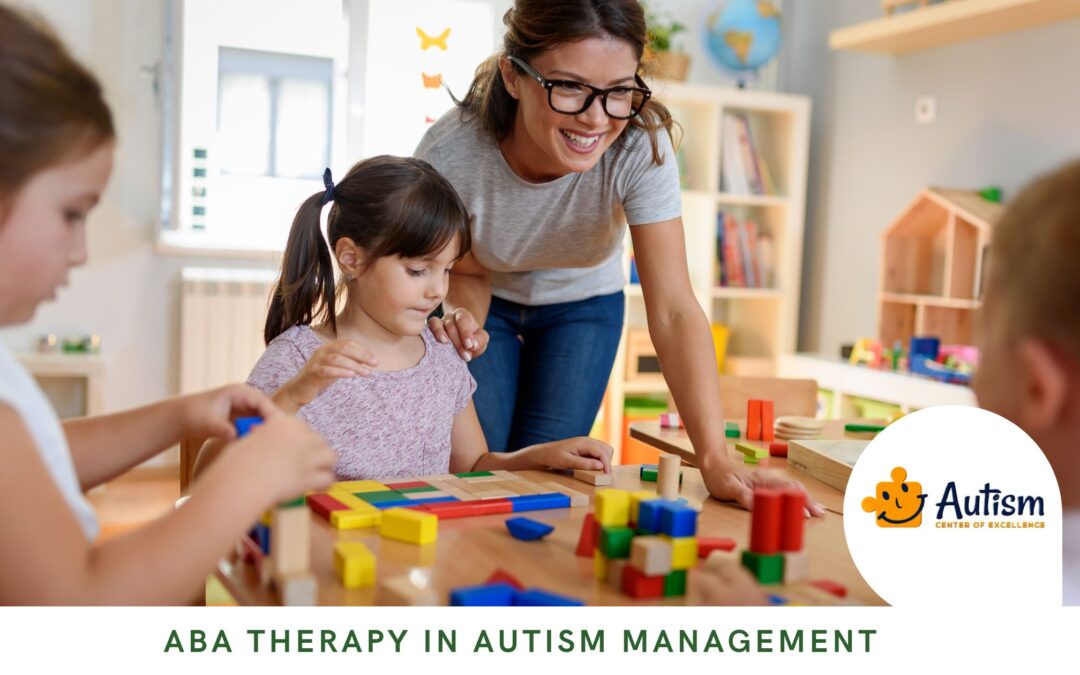
ABA Therapy can help children with autism improve various skills such as communication, social interaction, self-care, play, and learning. It also works on reducing problematic behaviors like aggression or self-harm that may interfere with learning or daily life. ABA does this by breaking down complex skills into smaller, teachable units, promoting learning in a step-by-step manner.
ABA Pros and Cons: Therapy for Autism
If you’ve heard about ABA therapy, or Applied Behavior Analysis, you might be curious about how it helps kids with autism. It’s important to know both the good things and the not-so-good things about it....
Read More
11 Ethical Alternatives to ABA Therapy for Autism
Applied Behavior Analysis (ABA) therapy has long been a common treatment for individuals with autism spectrum disorder (ASD), focusing on behavior modification through reinforcement techniques. While effective for some, concerns about the ethical implications and...
Read More
Understanding Level 3 Autism: Challenges, Support, and Care
Autism is a condition that affects how a person thinks, learns, and interacts with others. People with autism have different needs, and doctors classify autism into three levels. Autism level 3 is the most severe...
Read More

Embrace the Blue Pumpkin: 8 Ways to Create an Inclusive Halloween for Kids with Autism
Halloween is fun for many but for kids with autism it can be overwhelming. Costumes, decorations and new activities can turn a fun holiday into a stressful one. But with a little planning and understanding...
Read More
Preparing Your Child with Autism for Adulthood
The preparation of a Child with Autism into adulthood is one, which requires thoughtful planning and support. Unlike their peers, children on the autism spectrum may face unique challenges as they transition into adulthood. The...
Read More
Discriminative Stimulus in ABA Therapy Explained
ABA therapy is one of the most highly esteemed approaches in behavior modification specific to clients with developmental disorders such as autism. Scientific principles form the basis on which ABA therapy grounds, and it further...
Read More
Enhancing Communication with Your Child with Autism
Imagine trying to express your thoughts and feelings but not having the right words. This is often how children with autism feel, making communication essential to their growth and development. For parents and caregivers, finding...
Read More
Safety Measures Every Parent of a Child with Autism Should Consider
Parenting a child with Autism Spectrum Disorder is a rewarding but equally inspiring experience. As autism affects people uniquely, this leads to different views or perceptions of the world that surrounds it, as well as...
Read More
The 7 Dimensions of ABA: The Foundation for Autism Therapy
Applied Behavior Analysis (ABA) is the most effective treatment for autism. With a focus on behavior change and skill acquisition, ABA interventions are designed to increase socially significant behavior and improve the lives of individuals...
Read More
10 Fun and Inclusive Activities for Children with Autism
Every child should delight in the joy of playing, learning, and exploring the fascinating world around them. For children with autism, each small activity can make a significant impact on their development and well-being. This...
Read More
Can a Child be Slightly Autistic?
Have you ever wondered if a child can be "slightly" autistic? This is a common question among parents, caregivers, and educators who observe unique behaviors in children. The disorder ASD comes with various symptoms and...
Read More
Goals of ABA Therapy: Fostering Growth and Celebrating Achievements
Applied Behavior Analysis, or ABA, therapy has become one of the most recognized and research-supported interventions for helping children, especially those with autism, develop essential skills and behaviors. But what is it that really drives...
Read More
Mastering Self Monitor ABA Techniques: A Practical Guide to Behavior Success
Applied Behavior Analysis (ABA) is a trusted approach for understanding and improving human behavior. One of its several techniques that prove to be powerful is self-monitoring, which works towards independence and personal responsibility. What is...
Read More
Respondent Conditioning for Autism in ABA Therapy
When it comes to supporting children with autism through Applied Behavior Analysis (ABA) therapy, understanding different types of learning processes is key. One of these processes, respondent conditioning, plays a crucial role in helping children...
Read More

Rett Syndrome: Symptoms, Stages, Causes, Diagnosis, and Treatments
Our understanding of complex neurological conditions has grown tremendously over the years. Two such conditions, Rett syndrome and autism, are often grouped due to overlapping symptoms. However, while they may share some similarities, they are...
Read More
Autism vs. Social Anxiety: Similarities & Differences
Social situations can feel like a complex maze, especially for those navigating the world with Autism Spectrum Disorder (ASD) or Social Anxiety Disorder. While both conditions can make social interactions incredibly challenging, they stem from...
Read More
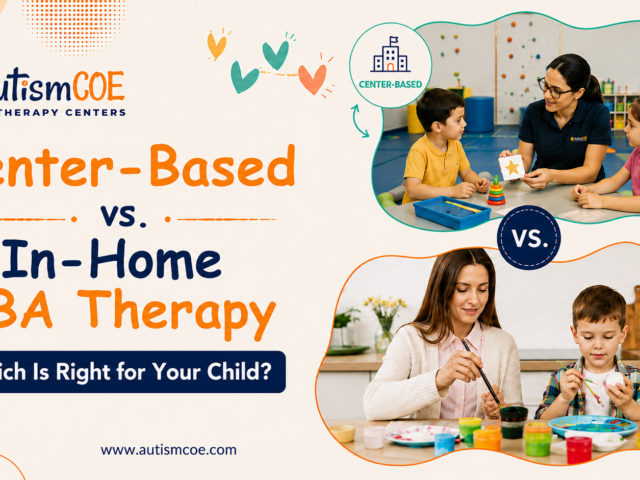
How to Choose Between Center-Based and In-Home ABA Therapy in Columbia, MD?
If your child was recently diagnosed with autism spectrum disorder, one big decision is where therapy happens — at home or in a clinic setting? Short answer: In-home ABA therapy works best for daily living skills...
Read More

How to Start ABA Therapy in Columbia, MD, Step-by-Step Guide
Starting ABA therapy in Columbia, MD involves six steps: confirming an autism diagnosis, contacting a local provider, verifying insurance coverage, completing a BCBA assessment, receiving a treatment plan with prior authorization, and beginning your child's...
Read More
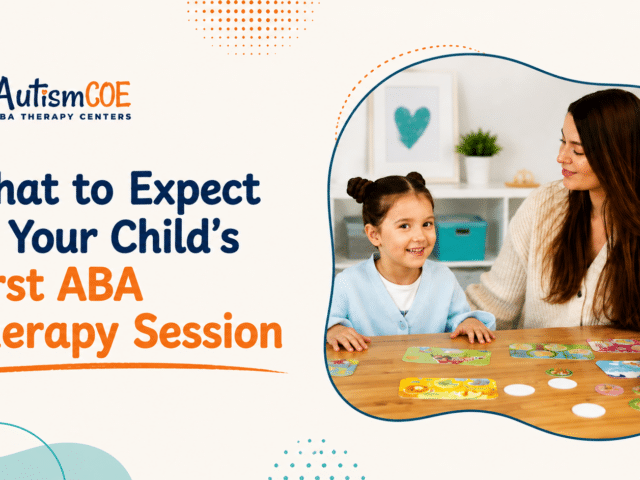
What to Expect at Your Child’s First ABA Therapy Session?
Your child's first ABA therapy session is a low-pressure introduction focused on rapport building, observation, and getting to know your child, not heavy teaching or formal testing. The goal of day one isn't to jump straight into skill building; it's to make sure...
Read More
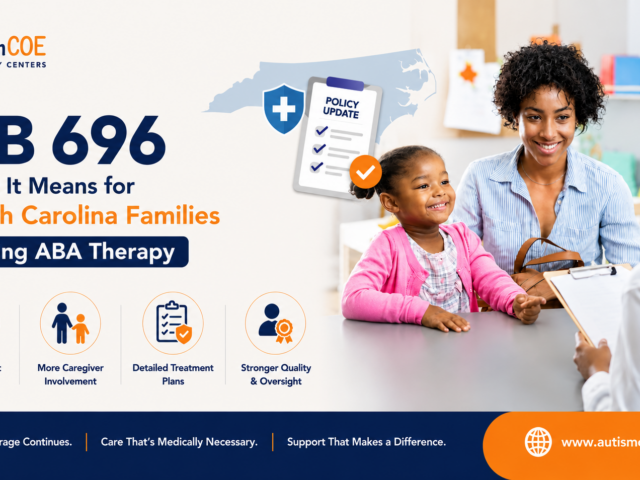
What HB 696 Means for North Carolina Families Seeking ABA Therapy?
HB 696 does not create an automatic, across-the-board end to North Carolina Medicaid coverage of ABA therapy. Your child's specific services and hours still go through the same medical-necessity review and authorization as before — now on an...
Read More
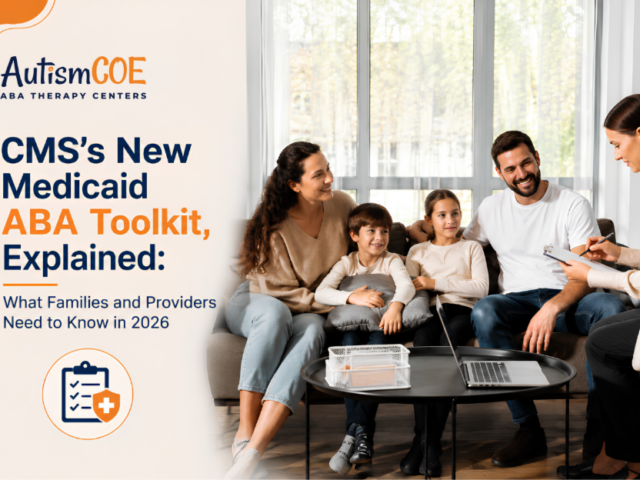
CMS’s New Medicaid ABA Toolkit, Explained: What Families and Providers Need to Know in 2026
On August 4, 2026, the Centers for Medicare and Medicaid Services (CMS) released a 173-page toolkit for state Medicaid and CHIP agencies. Headlines called it a "crackdown" on autism therapy. Here is the calmer version:...
Read More