
Navigating Asperger’s Syndrome: Key Characteristics and Support Strategies
Have you heard of Asperger’s Syndrome? It’s part of Autism Spectrum Disorder (ASD) and gives people a unique way of seeing the world. While there are challenges, many with Asperger’s have incredible strengths, like deep focus on their passions.
Understanding Asperger’s is key to offering support. Early diagnosis can make a big difference! Recognizing the signs and knowing how to help can create an environment where everyone thrives.
This blog will explain what Asperger’s is, its main traits, and possible causes. We’ll also cover how it’s diagnosed, available Asperger’s treatment options like behavioral therapy, and practical strategies to offer support at school, work, or home.
What is Asperger’s Syndrome?
Asperger’s Syndrome is a condition that affects how people experience the world, particularly in how they relate to other people and think. Unlike most individuals with autism, people with Asperger’s have strong interests and routines that they are passionate about and may approach social situations differently.
ASD covers a wide range of features and support needs, with Asperger’s at the milder end of that spectrum. Asperger’s stands out for its milder symptoms. Other than that, people with Asperger’s are different from people with other types of ASD because they typically do not have language delays.
While they speak well and perhaps use complex vocabulary, they may be unable to ‘read’ others — to recognize facial expressions, jokes, and sarcasm, for example. Asperger’s was once its own diagnosis, but the DSM-5 (2013) folded it into Autism Spectrum Disorder, typically classified as Level 1 ASD.
This understanding allows us to support better and enjoy the strengths and challenges that create the uniqueness of people with Asperger’s Syndrome. Isn’t it amazing how diverse minds can be?
Suggested: What is the Difference Between Autism and Asperger’s?
Key Characteristics and Symptoms
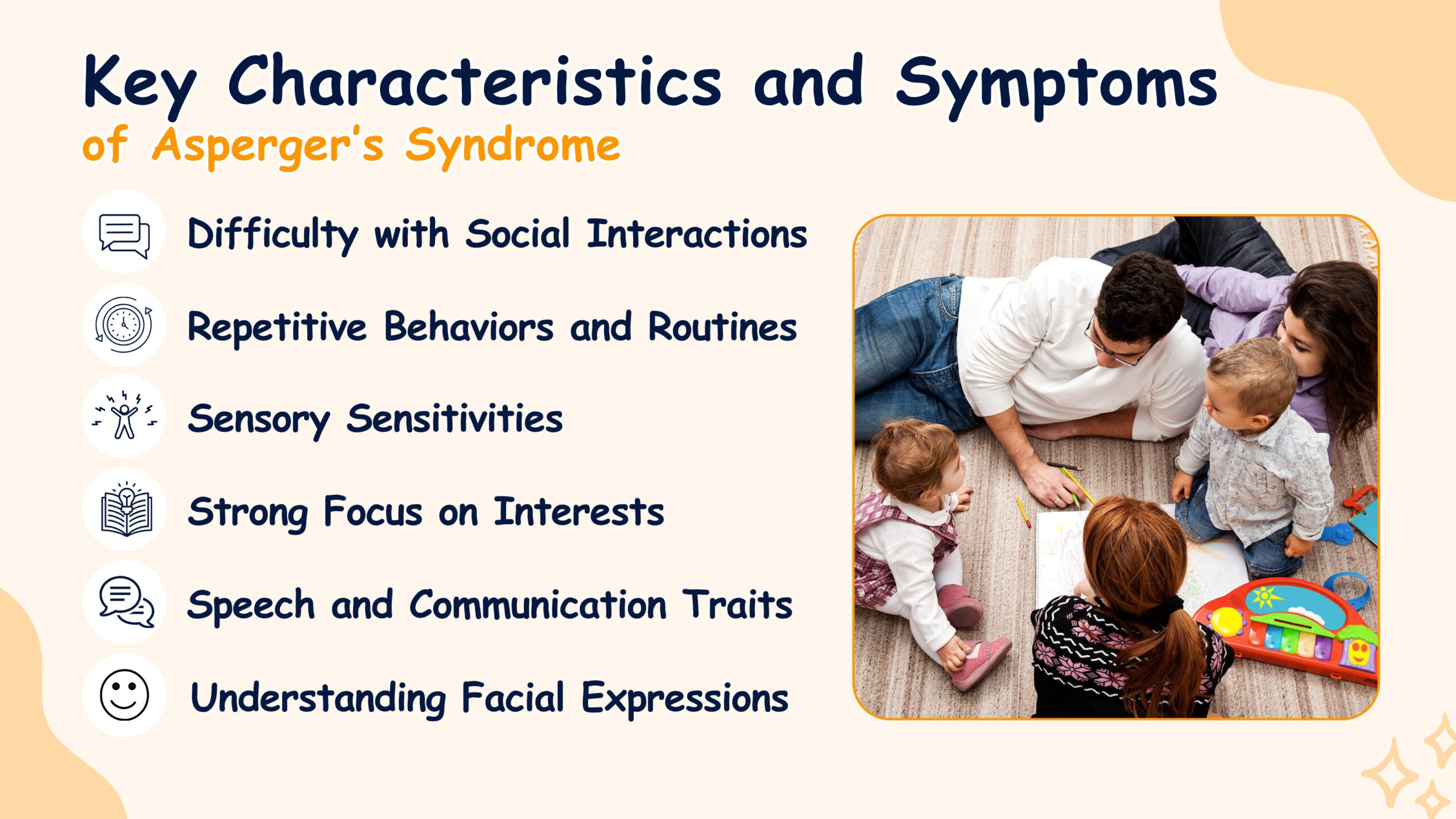
People with Asperger’s Syndrome often struggle with social interactions, like understanding cues or taking turns in conversations. They may have comforting routines, repetitive behaviors, and Sensory Sensitivities to sounds or lights. A key trait is their intense focus on specific interests, often becoming experts in their favorite topics. Their speech can be formal or precise, but they might find jokes or sarcasm difficult. They may also struggle to interpret facial expressions and body language. Recognizing these traits helps us better support their unique strengths.
- Difficulty with Social Interactions: Trouble recognizing social cues, turn-taking, or understanding tone of voice.
- Repetitive Behaviors and Routines: Preferring repeated actions or structured routines for comfort.
- Sensory Sensitivities: Overwhelmed by certain sounds, textures, lights, or smells.
- Strong Focus on Interests: Intense passion for specific topics, often leading to deep expertise.
- Speech and Communication Traits: Formal or precise speech but difficulty with jokes, sarcasm, or subtler humor.
- Understanding Facial Expressions (“Asperger syndrome face “): Challenges reading emotions or body language, like recognizing someone’s mood through their expressions.
Recognizing these signs helps us appreciate the unique traits and strengths of individuals with Asperger’s Syndrome!
What Causes Asperger’s Syndrome?
Although there is no known cause of Asperger’s Syndrome, researchers believe a combination of genetic and neurological factors is involved. The brain development differences in people with Asperger’s may lead to differences in how they process information and interact with their world.
It may also be related to genetics, as the condition often comes from family genetics. However, more research is needed to determine whether environmental factors during early development might also contribute.
Asperger’s causes deserve to be cleared up. The condition is not caused by parenting styles or the choices of a parent or parents. Also, another popular myth is that vaccines cause Asperger’s, but this has been disproven over and over again by studies.
We can focus on what we know to promote a better understanding, acceptance, and compassion for those diagnosed with the condition.
Diagnosis and Testing for Asperger’s Syndrome
Diagnosing Asperger’s Syndrome is a detailed process involving specialists interested in trying to understand how a person has experienced things. It’s not one test but a sequence of evaluations comprising interviews with the person and their family, behavioral observations, and questionnaires regarding social skills and routines.
Tools like the Autism Diagnostic Observation Schedule (ADOS) and The Autism Diagnostic Interview-Revised (ADI-R) is a structured diagnostic tool that psychologists, neurologists, and developmental pediatricians use to assess autism spectrum traits and rule out overlapping conditions. It works through a detailed caregiver interview covering developmental history, communication, and behavior patterns, helping specialists build an accurate picture of a person’s strengths and challenges.
An Asperger’s diagnosis exists to unlock support — not to assign a label. It opens the door to targeted therapies, social skills training, and self-understanding that help the person thrive. Beyond the individual, diagnosis also encourages broader acceptance and understanding of neurodivergence.
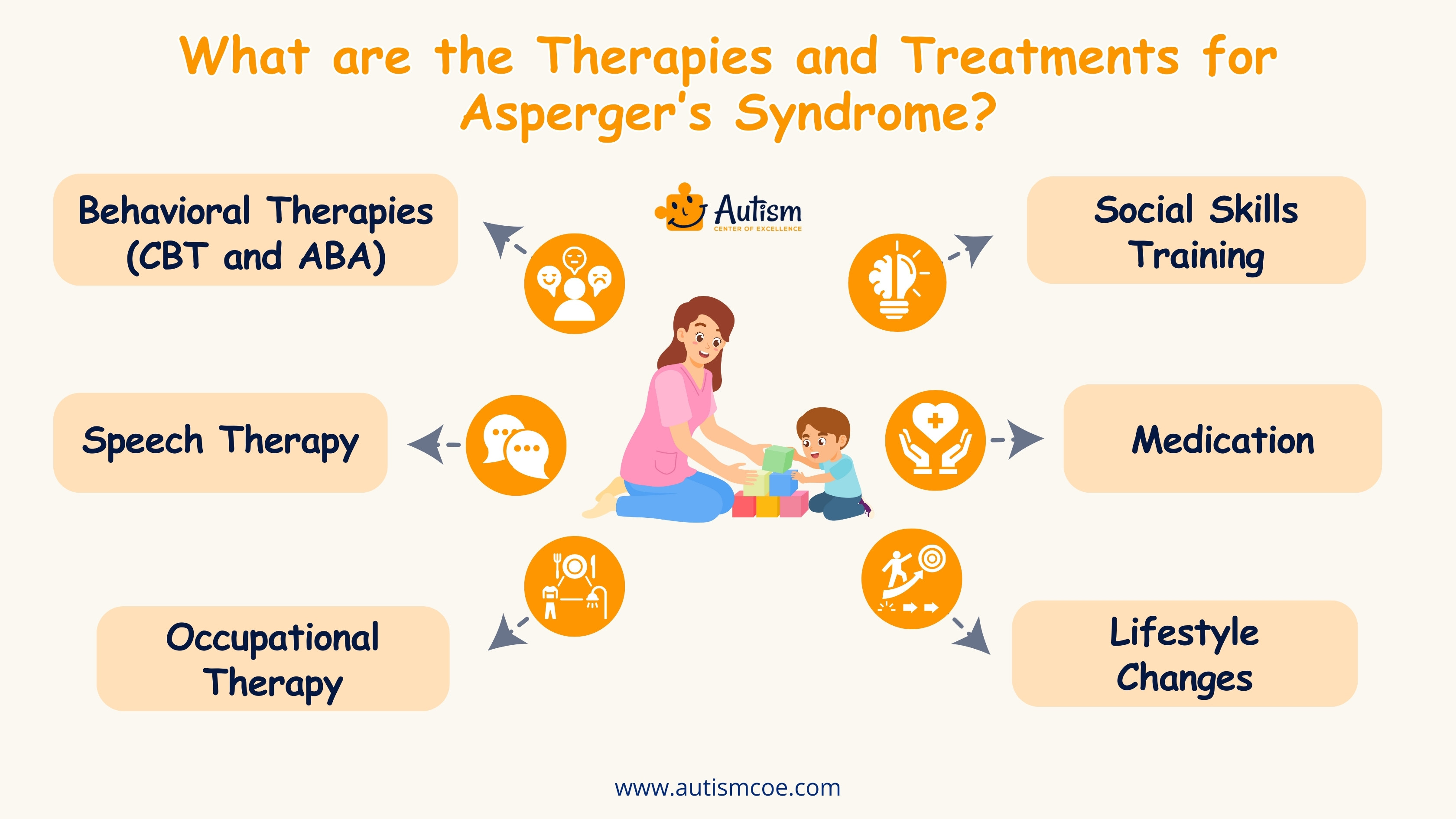
Treatment and Therapies for Asperger’s Syndrome
Every Asperger’s treatment or therapy aims to bring to light strengths, deal with challenges, and foster thriving for people with Asperger’s Syndrome.
Behavioral Therapies (CBT and ABA)
CBT and ABA are the two most common behavioral therapies for Asperger’s Syndrome. Cognitive Behavioral Therapy (CBT) helps individuals manage emotions and develop coping strategies for daily challenges. Applied Behavior Analysis (ABA) uses positive reinforcement to build social skills and reduce challenging behaviors. Both are typically tailored to the individual for the best outcomes.
Speech and Language Therapy
Speech and language therapy helps individuals with Asperger’s improve both spoken communication and social communication — including reading non-verbal cues like tone and body language, and engaging in back-and-forth conversation.
Social Skills Training Programs
Social skills training programs teach practical skills like reading body language, maintaining eye contact, and starting conversations. By rehearsing real-life scenarios in a safe, structured environment, these programs also build social confidence over time.
Medication for Co-Occurring Conditions
Medication doesn’t treat Asperger’s itself, but it can help manage co-occurring conditions such as anxiety, depression, or ADHD. It’s typically used as one component of a broader support plan rather than a standalone treatment.
Lifestyle Adjustments and Diet Considerations
Lifestyle changes — regular exercise, mindfulness practices, and a balanced diet — can support overall well-being for individuals with Asperger’s. These aren’t a cure, but they can improve focus, mood, and energy levels as part of a broader support approach.
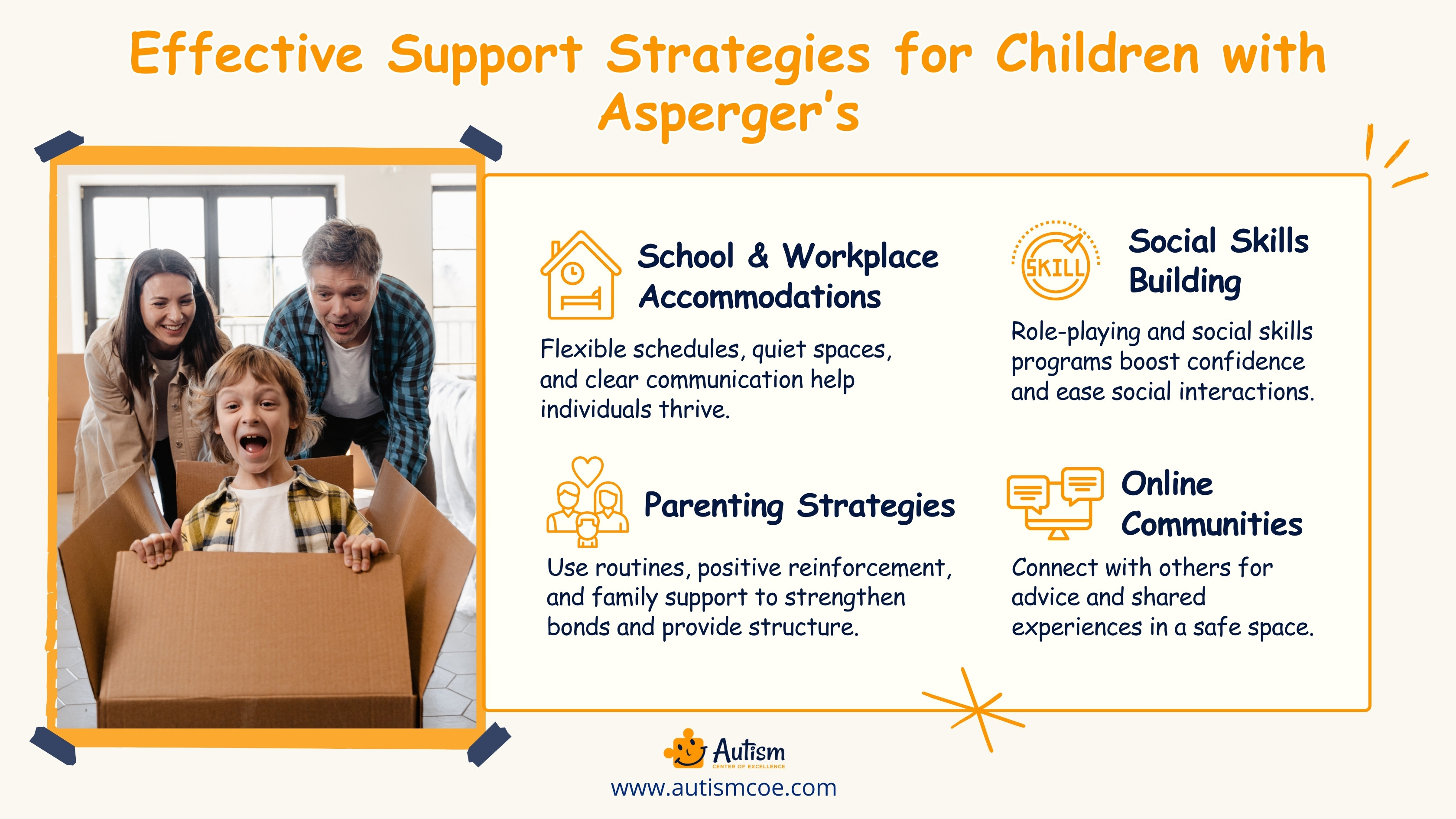
Support Strategies for Children with Asperger’s
Employing the support strategies, people with Asperger’s can feel empowered, backed, and prepared to sparkle in their own particular manners.
School and Workplace Accommodations
Common school and workplace accommodations for Asperger’s include flexible schedules, quiet workspaces, and clear, direct communication. These adjustments reduce sensory overload and add structure, helping people with Asperger’s succeed in education and work.
Building Communication and Social Skills
Communication and social skills can be built through structured social skills programs and role-playing activities. Practicing real-life scenarios in this way makes navigating social situations easier and builds lasting confidence.
Parenting Strategies and Family Support
Parents can support a child with Asperger’s by establishing predictable routines and using positive reinforcement consistently. Family therapy and support groups add another layer of support — strengthening family bonds and offering insight from others with shared experience.
Online Communities and Support Groups
Online forums and support groups offer a safe space for individuals and families to share experiences and advice. They connect people to a community that understands their specific journey.
Finding the Right Specialists and Resources
Choosing the right therapist or doctor to work with someone with Asperger’s Syndrome is a task of finding experienced people who have worked with neurodivergence. Some important factors are based on their experience of autistic spectrum conditions, their Therapeutic Approach, and compatibility with the individual’s needs. A critical point is to find someone who can foster trust and create a comfortable environment for meaningful progress.
Autism Center of Excellence for ABA Therapy
The Autism Center of Excellence is one of the leading ABA (Applied Behavior Analysis) therapy resources for Children with Asperger’s Syndrome. ABA Therapy works on creating social skills, communication, and adaptive behaviors while considering its beneficiary’s strengths. The center enlists dedicated experts and evidence-based practices and gives comprehensive care and support to individuals to help them thrive.
The Autism Center of Excellence and other resources connect individuals with Asperger’s Syndrome with the right specialists to ensure the highest level of care and guidance to help them reach their full potential.
What are Asperger’s Controlling Behaviors?
“Controlling behaviors” in Asperger’s Syndrome are usually a coping mechanism, not an attempt to control others. Common examples include rigid adherence to routines, resistance to change, and a strong need to organize one’s environment in a specific way. These behaviors typically stem from anxiety and a need for predictability in an otherwise overwhelming world.
The key to accomplishing this is to find ways to support these tendencies, such as preparing for transitions, setting up predictable routines, and practicing adaptability in small increments. Individuals can slowly build flexibility in the environment, but with patience and understanding, so they feel at ease and safe in their environment.
Enjoying Reading?
Join Our Weekly Newsletters!
Subscribe now to stay updated with our latest email updates.
Frequently Asked Questions & Answer
Is Asperger’s Syndrome a Mental Illness?
No, Asperger’s is a neurodevelopmental condition, not a mental illness. However, co-occurring conditions like anxiety or depression may be present.
How Does Asperger’s Affect Emotions?
Asperger’s can affect emotions in three main ways: difficulty regulating strong emotions, difficulty recognizing emotions in others, and difficulty expressing one’s own feelings clearly. These challenges vary widely from person to person.
What Triggers Asperger's Meltdowns in Adults?
Sensory overload, unexpected changes, social stress, and emotional frustration can trigger meltdowns in adults with Asperger’s.
Do Asperger's Have High IQ?
Not universally — IQ varies widely among people with Asperger’s, just as it does in the general population. Many do have average to above-average IQs, and it’s common for individuals to show intense strength or expertise in one specific area of interest, sometimes called a “special interest.”
Is Asperger's Syndrome still an official diagnosis?
No — since 2013, Asperger’s Syndrome is no longer a standalone diagnosis. The DSM-5 folded it into Autism Spectrum Disorder (ASD), typically classified as “Level 1” or requiring less support. Many people and clinicians still use the term “Asperger’s” informally or for individuals diagnosed before 2013.
What's the difference between Asperger's and autism?
Asperger’s is now considered part of the autism spectrum rather than a separate condition. Historically, the distinction was that people with Asperger’s did not have a language delay in early childhood and often had average or above-average IQ, whereas broader autism diagnoses could involve either.
Can Asperger's Syndrome be cured?
No, Asperger’s is not a disease and has no cure. It’s a lifelong neurodevelopmental difference. Therapy and support focus on building skills and improving quality of life, not eliminating the condition.
What are early signs of Asperger's in children?
Common early signs include delayed social skill development, intense focus on specific interests, difficulty with changes in routine, and atypical eye contact or body language — usually noticed between ages 2 and 6.
At what age is Asperger's usually diagnosed?
Asperger’s is often diagnosed later than other autism spectrum presentations — commonly between ages 5 and 9 — because language development is typically not delayed, making early signs less obvious.
Is Asperger's the same as high-functioning autism?
No, though the terms are often used interchangeably. “High-functioning autism” is an informal, non-clinical label sometimes used for autistic people without intellectual disability. Asperger’s was a specific, formal diagnosis (retired in 2013) defined by no early language delay — now typically classified as Level 1 ASD.
Conclusion
Asperger’s Syndrome is best understood with compassion, patience, and dedication. This is a journey from recognizing unique traits to a tailored support strategy, all to nurture personal growth and nurture an environment in which people with Asperger’s can grow. With the right tools and guidance, behaviors such as the need for structure or navigating challenges for developing social skills are all possible.
Know that you’re not the only one on this path. It’s important to get support from experienced professionals and connect with resources or join communities. From the Autism Center of Excellence and other trusted groups, individuals and families can gain access to valuable services and networks. Don’t hesitate to explore these resources and take proactive steps toward a brighter, more supported future.
Please Note: The content of this blog is for informational purposes only and should not be considered a substitute for professional medical advice, diagnosis, or treatment. Consult a qualified healthcare professional for personalized guidance tailored to your specific situation.

Esha Bhasin
Esha Bhasin is the award-winning CEO & Founder of Autism Center of Excellence (AutismCOE). She was honored with the 2026 Triangle Business Journal Corporate Leadership Award. Before founding AutismCOE, she spent over nine years as a Senior Consultant at KPMG US. She specialized in Medicaid and State Public Health. Inspired by her own family's autism journey, she founded AutismCOE to improve access to quality autism care. Esha writes about autism care, Medicaid policy, and healthcare operations.